Keep Yellow Springs a Village
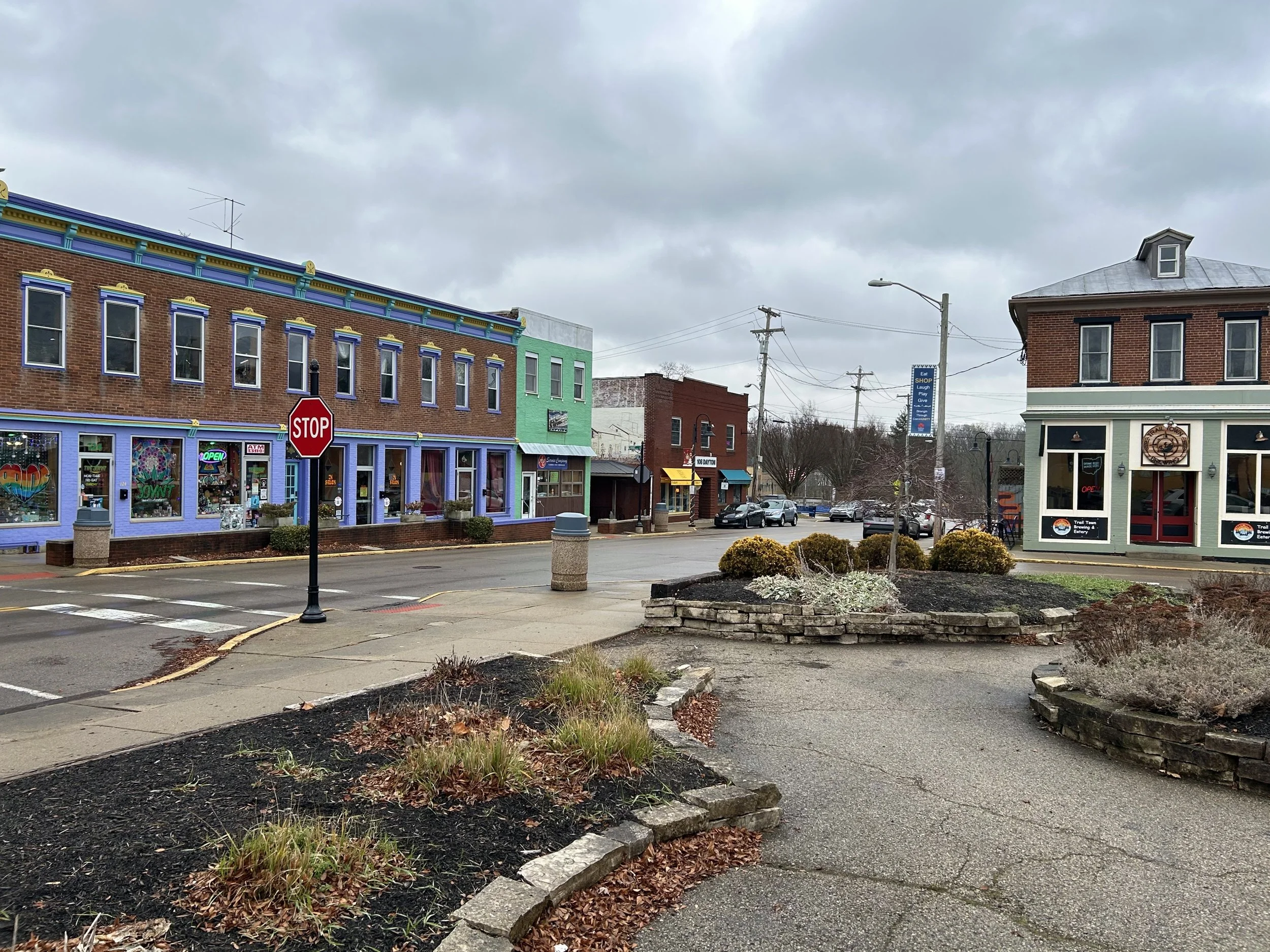
For many community members, the "Village" designation is central to Yellow Springs' identity, cultural scale, and small-town character. With a current population of approximately 3,700 to 3,800 residents, adding the ~1,200 additional residents required to reach city status represents a notable increase in density.
Although we are strongly supportive of affordable housing, this is an important community issue we must address.
Opponents of large-scale residential initiatives—such as proposed developments at Glass “Farm”—frequently express concern that adding a significant block of new housing units could accelerate crossing the 5,000-resident threshold. Key community concerns include:
Community Scale & Character: Transitioning to a formal "City" alters the cultural perception and small-scale feel of the town.
Infrastructure Capacity: Absorbing hundreds of new residents impacts local traffic patterns, utility capacity, school district enrollment, and surrounding natural ecosystems.
What would happen if Yellow Springs became a City?
Becoming a city overburdens Yellow Springs: it exceeds sewer plant capacity, forcing multi-million-dollar expansions, triggers costly state-mandated bureaucracy, overcrowds local schools by up to 40%, and gridlocks village streets with nearly 1,000 additional resident vehicles. Click on each topic to learn more.
-
Current Baseline: The Village operates a Water Treatment Plant (completed in 2017 on Jacoby Road) rated at 1.0 million gallons per day (MGD), with two elevated storage towers holding 2 million gallons combined (roughly a 4-day reserve at current average daily usage of ~0.5 MGD).
Impact of Growth: Adding ~1,200 residents (a ~32% population increase) would raise average daily water demand from ~500,000 gallons per day to 650,000–700,000 gallons per day. While raw production capacity could handle baseline usage, it significantly reduces emergency reserves needed during summer droughts, lawn irrigation, or fire-suppression events, while requiring costly distribution line upgrades to new development areas.
-
Current Baseline: The Water Reclamation Facility is rated for an average daily flow of 0.6 MGD (with peak wet-weather capacity up to 3.4 MGD).
Impact of Growth: Existing dry-weather wastewater flows already run close to the plant’s 0.6 MGD average design rating. Adding 1,200 residents would push baseline daily wastewater generation to 0.7–0.8 MGD, exceeding the plant's rated average daily design capacity. This would force a multi-million-dollar plant expansion to comply with Ohio EPA discharge permits for Yellow Springs Creek and the Little Miami River watershed.
-
State Legal Requirements: Becoming a city triggers mandatory legal requirements under state law:
Civil Service Commission: The municipality must establish and fund a Civil Service Commission to handle civil service exams, hiring, promotions, and appeals for municipal employees.
Statutory City Roles: State law mandates specific city officers, such as a dedicated City Auditor/Treasurer and City Law Director.
Operational Hiring Needs:
Police Department: Managing ~5,000 residents on top of heavy weekend tourist traffic would require hiring additional full-time patrol officers, dispatchers, and administrative supervisors to maintain 24/7 coverage.
Public Works & Electric/Water Staff: Expanded road miles, extended utility lines, storm drains, and public space maintenance require additional maintenance crews and utility technicians.
-
Current Baseline: The Yellow Springs Exempted Village School District (Mills Lawn Elementary, Yellow Springs Middle School, and Yellow Springs High School) currently serves approximately 650 to 700 students.
Impact of Growth: Adding 1,200 residents yields an estimated 150 to 300 additional K–12 students, representing a 20% to 40% increase in student enrollment:
Classroom Capacity: Classroom space, cafeterias, and specialized facilities at Mills Lawn and the Middle/High School campus would face immediate overcrowding, likely requiring modular classrooms or physical building expansions.
Tax Levies & Staffing: To maintain low student-to-teacher ratios and hire new certified teachers and support staff, the school district would need to seek voter approval for new operating levies and facility bonds.
-
Collection Logistics: The Village contracts out residential solid waste and recycling collection.
Impact of Growth: Adding hundreds of households increases total waste tonnage, driving up contract costs and adding collection routes. Increased heavy-truck traffic on narrow village streets leads to faster pavement degradation and temporary traffic delays on collection days.
-
Current Baseline: Peak weekend tourism (visitors to Glen Helen, John Bryan State Park, downtown retail, and local events) already pushes on-street parking and public lots along Xenia Avenue to 100% capacity.
Impact of Growth:
Resident vs. Tourist Competition: Adding 1,200 residents introduces roughly 800 to 1,000 additional resident-owned vehicles. Residents running downtown errands or seeking parking near their own homes would compete directly with tourist traffic.
Neighborhood Overflow: As downtown core parking fills, overflow vehicles spill deeper into residential side streets, blocking driveways, sightlines, and narrow intersections.
Infrastructure Demands: To address acute parking shortages, the city would be forced to consider costly parking structures or implement administrative parking permit programs for residential zones.

Scan QR code or click here to sign the petition to formally request that Village Council pause all decisions concerning development of Glass “Farm” until public input has been gathered via public vote and the full impacts of development to our community have been carefully assessed.